Spring Field Studies on Riffle Beetles and Hydraenid Beetles Completed
The spring field studies cycle on water beetles, riffle beetles (family Elmidae) and hydraenids (family Hydraenidae), has been completed under the guidance of our Senior Curator, Assistant Professor Vlatka Mičetić Stanković, PhD, as part of a professional collaboration with Branka Bruvo Mađarić, PhD, from the Ruđer Bošković Institute.
The research is being carried out within projects funded by the Adris Foundation (“Riffle beetles and minute moss beetles – hidden indicators of the health of our karst water habitats) and the Croatian Science Foundation (“Unraveling the Eastern-Adriatic minute moss beetles (Ochthebius; Hydraenidae; Coleoptera): A phylogenomic approach to integrative taxonomy (IP-2025-02-1684)”.
So far, more than 130 locations have been surveyed, covering the entire Croatian Adriatic region – from the southernmost point, Punta Oštro on the Prevlaka peninsula, through Konavle, the Dubrovnik area, Ston, Pelješac, the surroundings of Split and Trogir, Zadar, and the islands of Rab, Vir, Pag, Krk and Cres, all the way to northern Istria.
Other Croatian Natural History Museum staff members also participated in the field study: curator Denis Bućan, MSc in Ecology, museum technician Tin Rožman, and museum advisor Assistant Professor Martina Podnar Lešić, PhD.
Riffle beetles and especially hydraenids inhabit a variety of freshwater habitats, from springs, streams and rivers to small rock pools located along the seashore. However, many species are highly sensitive to human-induced changes in their habitats, making them excellent indicators of ecosystem quality.
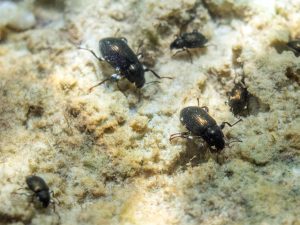
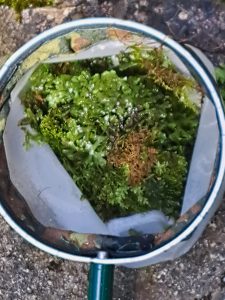
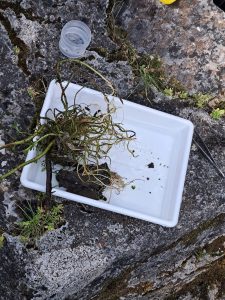
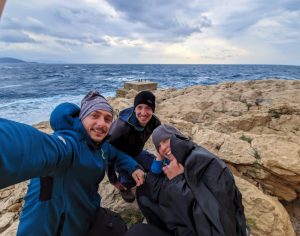
The photographs show several of the surveyed habitats, as well as a hydraenid beetle of the genus Ochthebius on a stone and a riffle beetle of the genus Limnius from Peračko Blato at Baćina Lakes (photograph by Marinko Babić).
Following the intensive spring sampling, fieldwork will continue throughout the summer and into autumn, when the studied insects are most active. During the colder months, laboratory analyses will begin, including identification of collected specimens, preparation of material for further molecular analyses, and their final deposition in the Museum’s collections.
All these activities will contribute to a better understanding of Croatia’s fauna and, consequently, to the preservation of biodiversity and our greatest natural resource – water: springs, rivers, streams, lakes and ponds.